Who We Are

We are multi-disciplined team of researchers, advocates, artists, and change enablers. Collectively, we've worked with a variety of institutions including IPCC, World Wildlife Fund, OECD, The Wilson Centre, Greenpeace, School for Field Studies, and a variety of public entities in Asia, Latin America, Madagascar and the Pacific.
Through our many experiences for over 25 years, we formed Tohu, to strengthen our voices, as well as those we seek to uplift.
Our Mission
is to provide a platform for all vulnerable and underrepresented communities to become empowered to advocate for their people. We aim to shift institutional systems from maintaining life to participating in it.
Our Vision
is to provide a clear and repeatable methodology to support communities to engage, advocate and make decisions in the key conversations that will shape their futures.
why 'tohu'?
For us, tohu is both a process and an outcome.

‘Tohu’ is much more complex, intricate, and nuanced than just a word, because the context determines its meaning.
Used in Māori and other Polynesian languages, Tohu can be a sign, a mark, or an emblem; but also advice, an omen, prediction, proof, or prophecy. Tohu can also mean to guide, direct, and instruct, but also to preserve and conserve, values further reinforcing why we chose it.
As with many Indigenous peoples, concepts convey meaning beyond a literal form; it is both a noun and a verb. It is cultural and spiritual.
We want to have the many concepts of Tohu inspire our work, so we are able to navigate the complexities of the world.
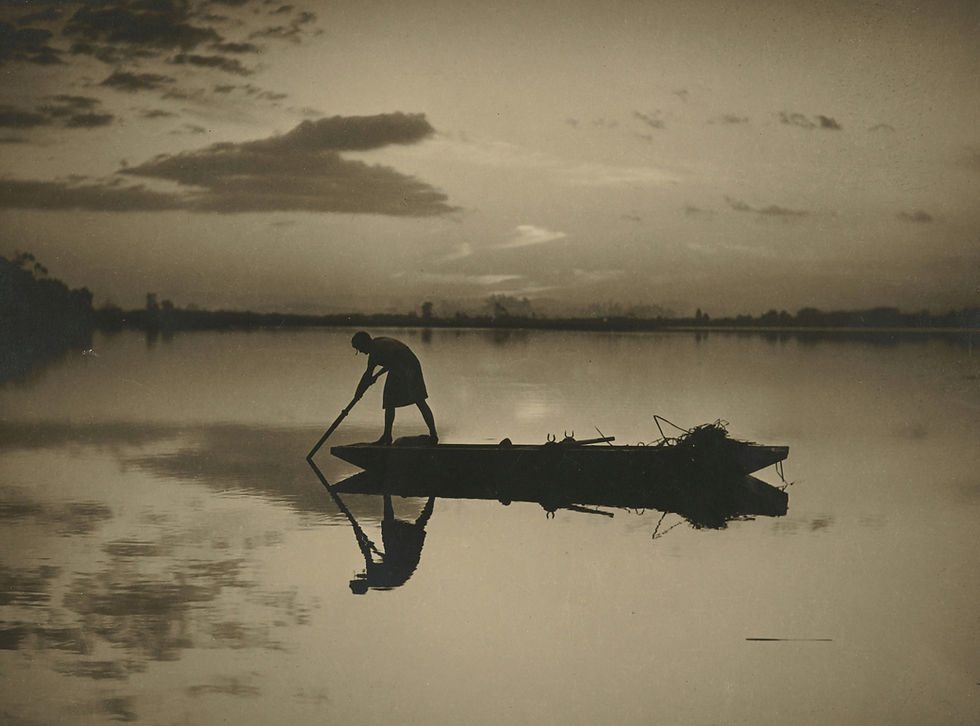
Further exploring the symbology of our name and identity, Tohu Indigenous Analytics (TIA) forms another Māori notion that guides our principles. ‘Tia’ means to steer, to adorn, or to take a vigorous stroke.
The wooden oar is a symbol that represents forces, movements, mobility, subsistence, relationships, and spirituality.
For many Indigenous peoples, especially those living near rivers and seas, the wooden paddle is an artifact of great importance that goes far beyond its practical function.
It represents a deep connection with nature, culture, and history, playing essential roles in subsistence, spirituality, and cultural identity. It is also versatile as it can be used as a weapon and a tool to dig, plow, and sow. The sharp end of the paddle is even used to bury into sandbanks, serving as anchor for the canoes.
Our Collective
United in purpose to transform justice and decision-making through the power of Indigenous insights.

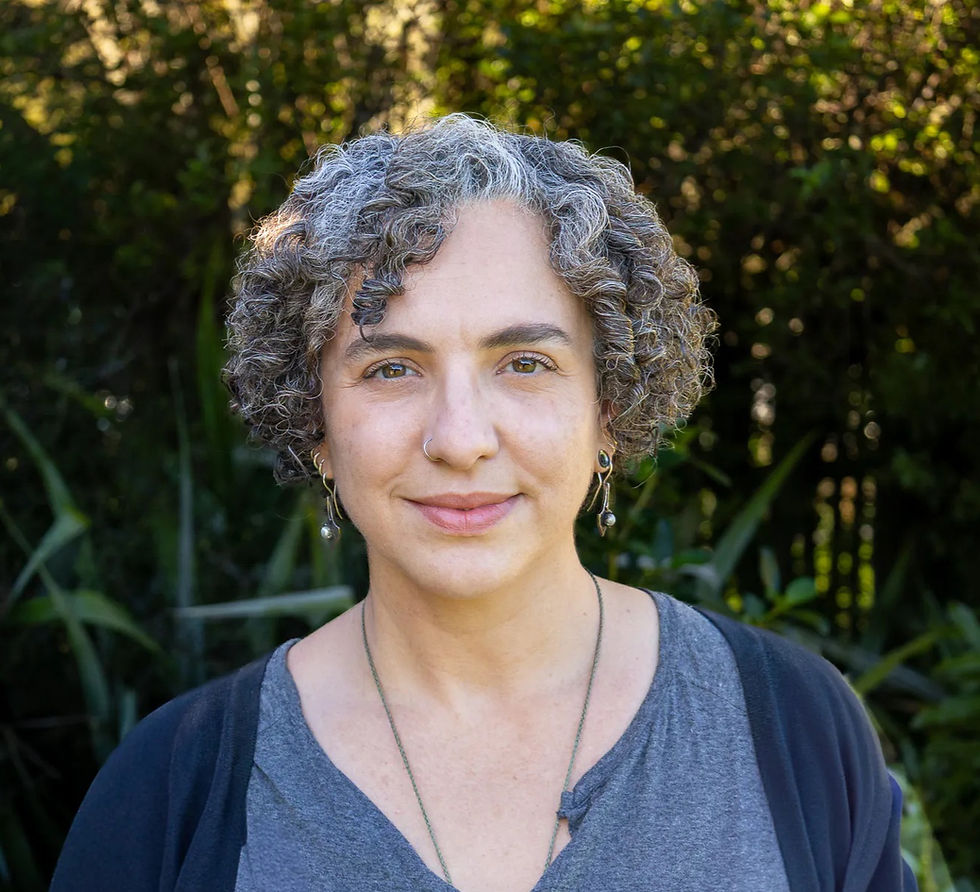

Ritodhi Chakraborty
South Asia
Environmental and Social Justice Educator and Analyst I am a feminist parent, environmental-social scientist, and social-ecological justice activist. Over the past decade, I have worked alongside hundreds of local and indigenous communities on issues of food security, biopiracy, land use & tenure, labor migration, climate impacts and household wellbeing. I have also worked with non-profits, think tanks and educational institutions, such as the IPCC, OECD, Wilson Centre and the University of Wisconsin, exploring climate change adaptation initiatives, climate/environmental justice, ecosystem services and social-ecological systems research.
Aline Carrara
Latin America
Environmental and Social Justice Educator and Analyst I am an educator, researcher, and activist focused on the intersections between food sovereignty, public policy, development, and environmental transformations from the perspective of land use, land rights, and territorial management and planning in Latin America. In the Pacific, I support the connection between Indigenous knowledge and national biosecurity policies. I am a mother, and I actively work to promote, foster, and support socio-environmental and climate justice.
Hirini Matunga
Aotearoa (New Zealand)
Design Strategist / Educator / Co-creator My research focus is Māori self-determination through planning, design, environmental management and policy analysis and Indigenous people’s experience. Taking the view that ‘being Māori’ or ‘being indigenous’ in a colonial context is a research project in itself, ‘self-analysis, ‘self-reflection’, and theorising the role that Māori/Indigenous planning, design, policy, environmental management might play in decolonising processes has been a primary focus alongside hypothesising what ‘Māori/Indigenous planning, design, and environmental policy might be.


Nathan Martin
Aotearoa (New Zealand)
Design Strategist / Educator / Co-creator Tēnā koe (Hello to you) Ko Tainui te waka (my canoe is Tainui) Ko Mangapu rāua ko Waitomo ngā awa (My rivers are Mangapu and Waitomo) Ko Pirongia rāua ko Owhawhe ngā maunga (My mountains are Pirongia and Owhawhe) Ko Ngāti Maniapoto te iwi (My tribe is Ngāti Maniapoto) Ko Ngāti Huiao rāua ko Ngāti Uekaha ngā hapu (My sub-tribes are Ngāti Huiao and Ngāti Uekaha) Ko Rereamanu rāua ko Toki Kapu ngā marae (My place to stand and belong are Rereamanu and Toki Kapu) No Ōtorohanga rāua ko Waitomo ahau (I am from both Ōtorohanga and Waitomo) Ko Nathan Martin tōku ingoa (My name is Nathan Martin)
Johanna Mitra
USA / Germany
Communications I am the co-founder of oloNala, a non-profit aimed at supporting Malagasy artists, educators, and collectives in combining artistic expression and conservation. I am currently a Master’s student in International Nature Conservation at the University of Göttingen, Germany, and Lincoln University, New Zealand. I received my MBA from Quantic School of Business and Technology and my B.A. from Stony Brook University, USA, in Ecosystems and Human Impact and Geospatial Science.
Heema Gokani
Madagascar / UK
Communications I’m part of the communications team at Tohu, where I draw on my background in psychology and business to make complex ideas accessible and engaging.Before joining Tohu, I worked in various academic and clinical roles in the UK, conducting research on human behaviour, decision-making, and wellbeing, and providing psychological support to individuals and communities. I’m an advocate for systems-informed and culturally sensitive approaches that empower voices, strengthen collaboration, and create sustainable change. I’m currently training as a Clinical Psychologist at University College London and received my MBA from Quantic School of Business and Technology.